Thujone – pronounced “thoo-jone” with a soft ‘J’ – is a naturally occurring substance, also found in the bark of the thuja, or white cedar, tree, and in other herbs besides wormwood – including tansy and the comon sage used in cooking. Aside from absinthe, other popular liquors, including vermouth, Chartreuse, and Benedictine, also contain small amounts of thujone. In fact, vermouth, which was originally made using the flower heads from the wormwood plant, takes its name from the German “wermut” (“wormwood”). Extremely high doses of thujone are dangerous, and have been shown to cause convulsions in laboratory animals, but the concentration of thujone actually found in absinthe is many thousands of times lower than this. Thujone’s mechanism of action on the brain is not fully understood although certain structural similarities between thujone and tetrahydrocannabinol (the active component in marijuana) led to some speculation in the 1970’s that both...
read more
You’ll find there an ever increasing databank of scientific papers on thujone and the effects of absinthe. The entires are arranged chronologically. Wherever possible the full text of the article is given (generally in Adobe PDF format), but where this is not permitted by licensing restrictions, an abstract or summary is included. Where the article is shown in both text and PDF versions, the illustrations, diagrams, references and acknowledgements have, for reasons of clarity and space, been omitted from the text version, but will all be found in the PDF. For additional reference, a selection of scientific articles from Belle Epoque era journals is included as well. While the science in these has of course long been superseded, they give a flavour of the prevailing conventional wisdom of the day, and help explain the demonization of absinthe at the end of the 19th and beginning of the 20th centuries....
read more
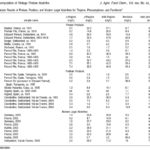
Independent data on the actual thujone level of many contemporary absinthes is often strikingly at variance with the levels claimed by the manufacturers. The tests below have all been carried out by accredited testing laboratories – they are presented here largely “as is”, in the original language, without further comment. It’s worth bearing in mind that thujone testing is a complex process, requiring sophisticated equipment and considerably technical experience on the part of the operator. False or anomalous results are not unusual even from laboratories with a reputation for competence, and so all results should be treated with caution, at least until verified by multiple independent testing. Permitted maximum thujone levels in foodstuffs and liquor are: European Community (and many other countries, which have adopted the same de facto standards) – 0.5 mg/kg in non alcoholic beverages. – 10 mg/kg in alcoholic beverages except those produced from Artemisia species...
read more













 The distinctive herb in absinthe is grand wormwood (Artemesia absinthium), and the chemical name for the principle active ingredient in wormwood is thujone. Thujone is a terpene and is related to menthol, which is known for its healing and restorative qualities. In its chemically pure form, it is a colourless liquid with a menthol-like aroma. Oil of Artemesia absinthium (or wormwood oil as it’s usually called) is approximately 40-60% thujone.